ABOUT

Fifteen years.
One workshop.
Tasmanian timber.

THE WORK

BUILT FOR THE ROOM
IT LIVES IN

Most of the homes Tom works in were built between 1900 and 1960. They have uneven walls, irregular floor levels, and a character that flat-pack cabinetry actively works against. Custom joinery isn't a luxury in these houses — it's the only thing that looks right.

Tom takes on kitchens, built-in cabinetry, and custom furniture. Occasionally a staircase. He doesn't do commercial fit-outs or production runs. The work suits someone who wants one thing made properly, not a contractor who can do everything quickly.
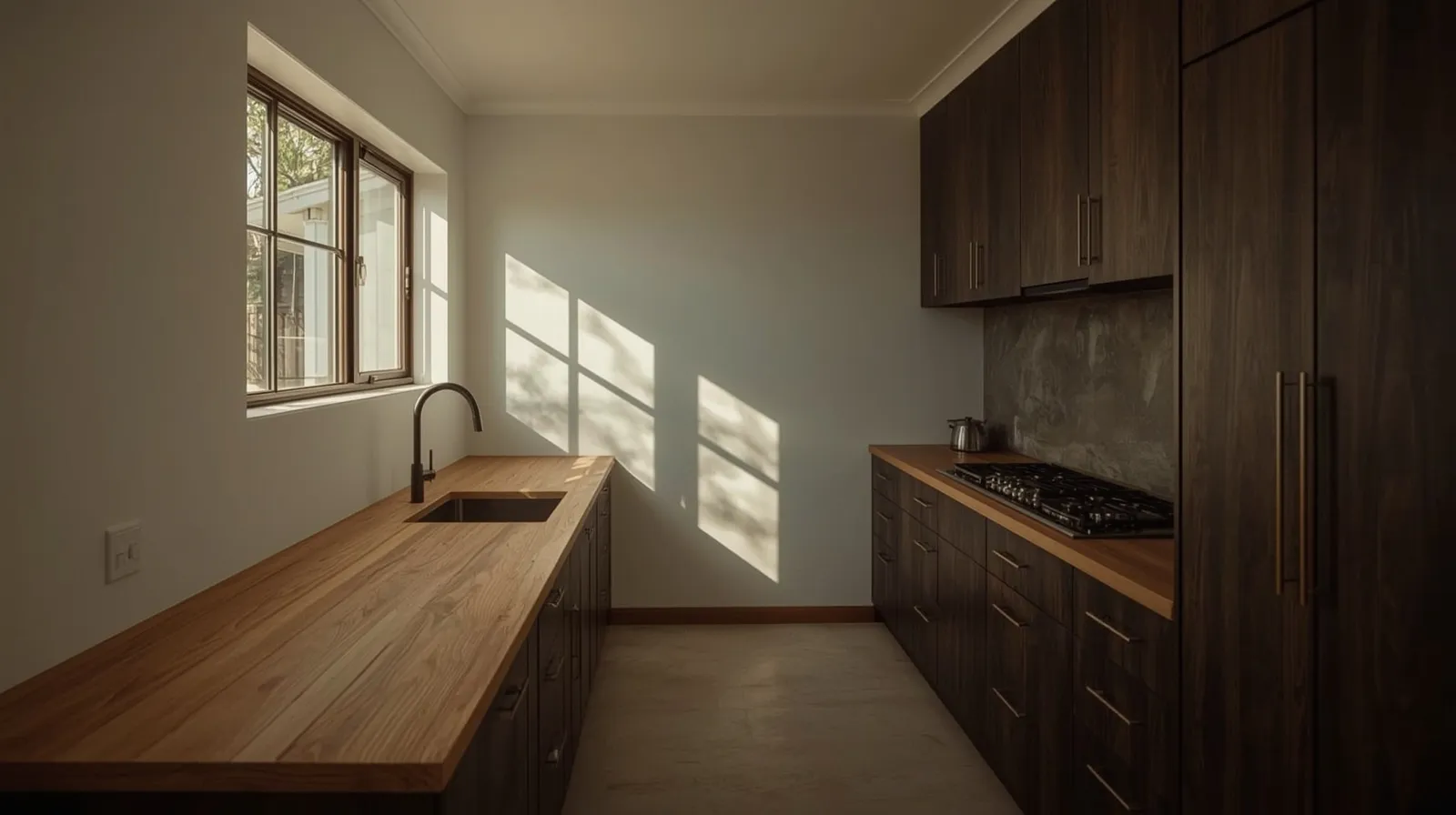
Custom blackwood kitchen — Geeveston
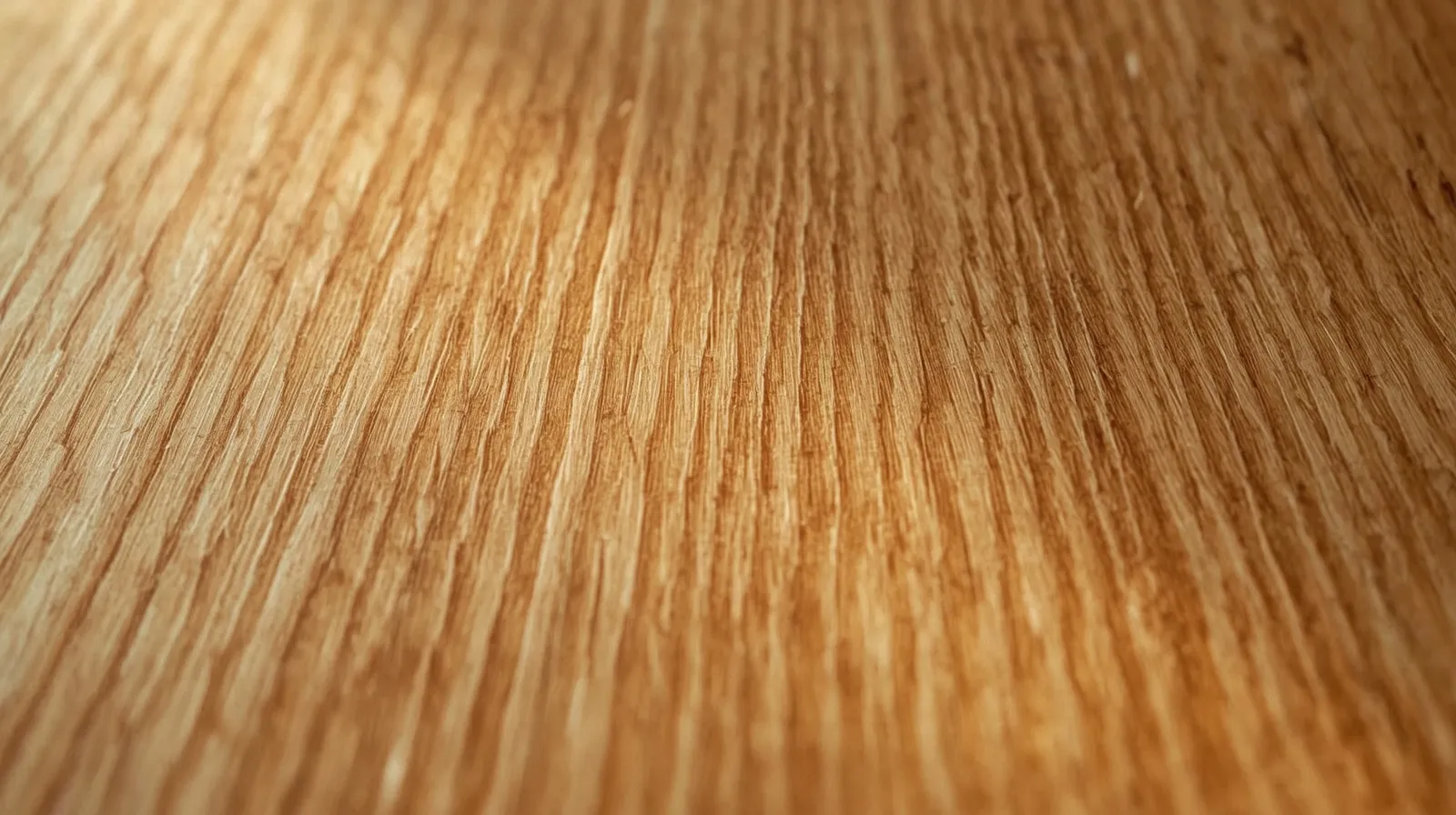
Huon pine grain detail

THE MATERIAL

TIMBER THAT TOOK A CENTURY
TO BECOME USEFUL

Tom works primarily in Tasmanian blackwood, Tasmanian oak, and salvaged Huon pine. Each timber is sourced locally — from mills he's used for years or from salvage when the right piece comes up.

Huon pine grows at roughly one millimetre a year. A bench seat made from it today might be built from timber that was already a hundred years old when it was felled. It doesn't warp. It doesn't move. It outlasts almost everything built around it.

Blackwood is faster growing but no less considered — the figure in a well-chosen blackwood panel is as distinctive as a fingerprint. Tom selects timber for individual jobs, not in bulk. What goes into your kitchen was chosen for your kitchen.

THE PROCESS

WHAT IT LOOKS LIKE TO
COMMISSION A PIECE

It starts with a site visit. Tom comes to the space, takes measurements, and asks questions about how the room is used. This isn't a sales call — it's the first part of the job. The brief gets built in person, not over email.

Timber selection happens early. For most jobs Tom will bring samples or take the client to the mill. The choice of material shapes everything that follows — the joinery details, the finish, the way the piece will age. It's worth the conversation.

Once the design is agreed and the deposit paid, the work moves to the workshop. Tom builds alone. Most jobs take eight to fourteen weeks from confirmation — longer for complex pieces or when the right timber needs to be sourced. He'll be in touch if anything changes, but he won't send weekly updates for the sake of it.

Installation is done by Tom. He allows a full day for a kitchen, half a day for built-ins. The final adjustments — scribing to walls, fitting doors, setting drawer tension — are where the difference between custom and off-the-shelf becomes obvious. He doesn't leave until it's right.

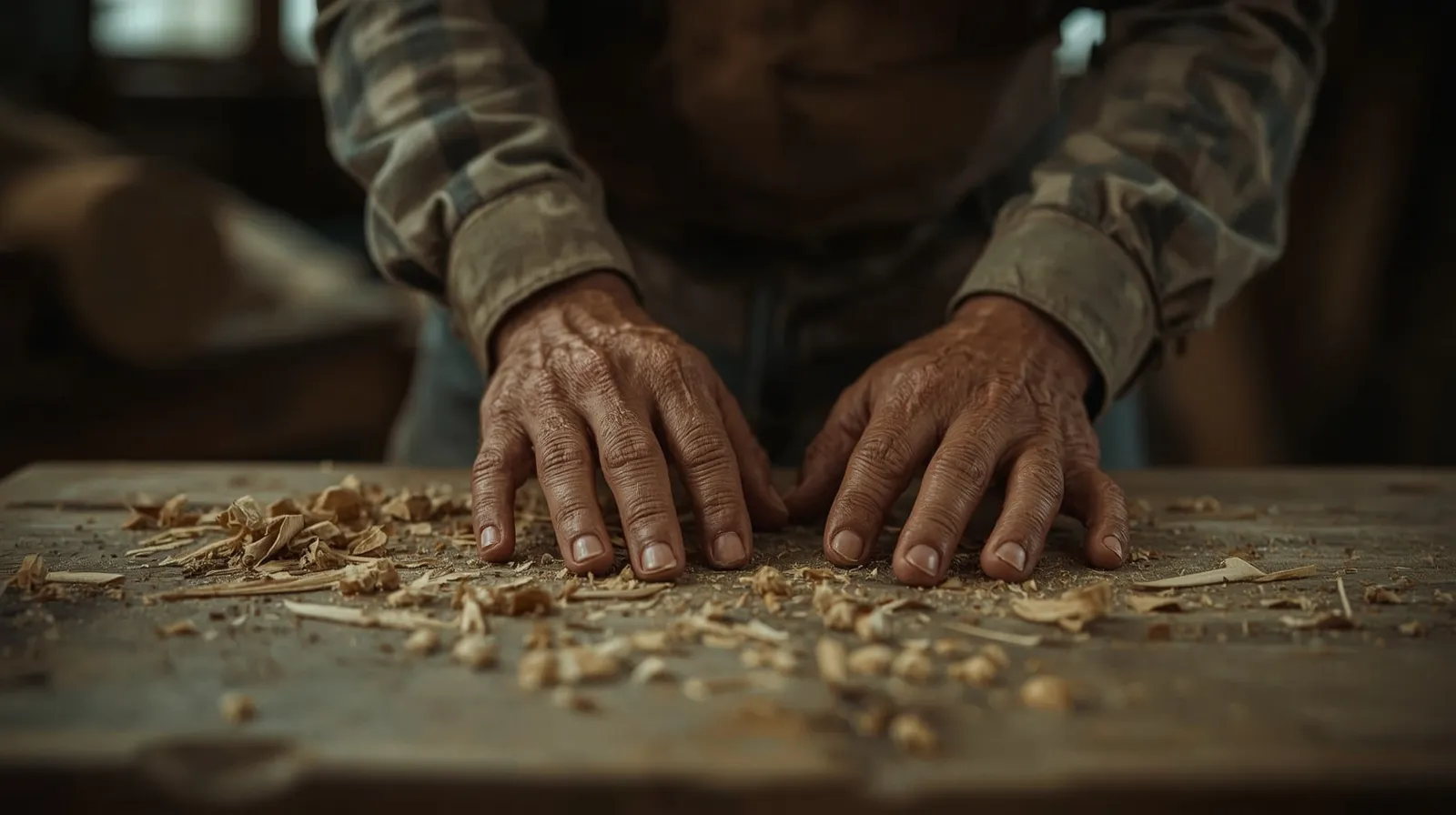
Tom Whitfield at work in the Huon Valley workshop

TOM WHITFIELD

THE HUON VALLEY, VIA FIFTEEN YEARS OF OTHER PEOPLE'S KITCHENS

Tom grew up in Geeveston. He trained under a furniture maker in the valley in his early twenties — bench joinery, hand tools, the slow way of doing things — and set up his own workshop at thirty. He hasn't moved far since.

He's not on social media. He doesn't exhibit at trade shows. The work gets found the way it always has — someone eats dinner at a table Tom made, asks whose it is, and makes a call.

He lives ten minutes from the workshop with his partner and two dogs. He takes December off.

IF THE WORK FEELS RIGHT,
GET IN TOUCH.

Tom takes on a limited number of jobs each year. The best starting point is a conversation about the space and what you're hoping to make of it.

Start a conversation