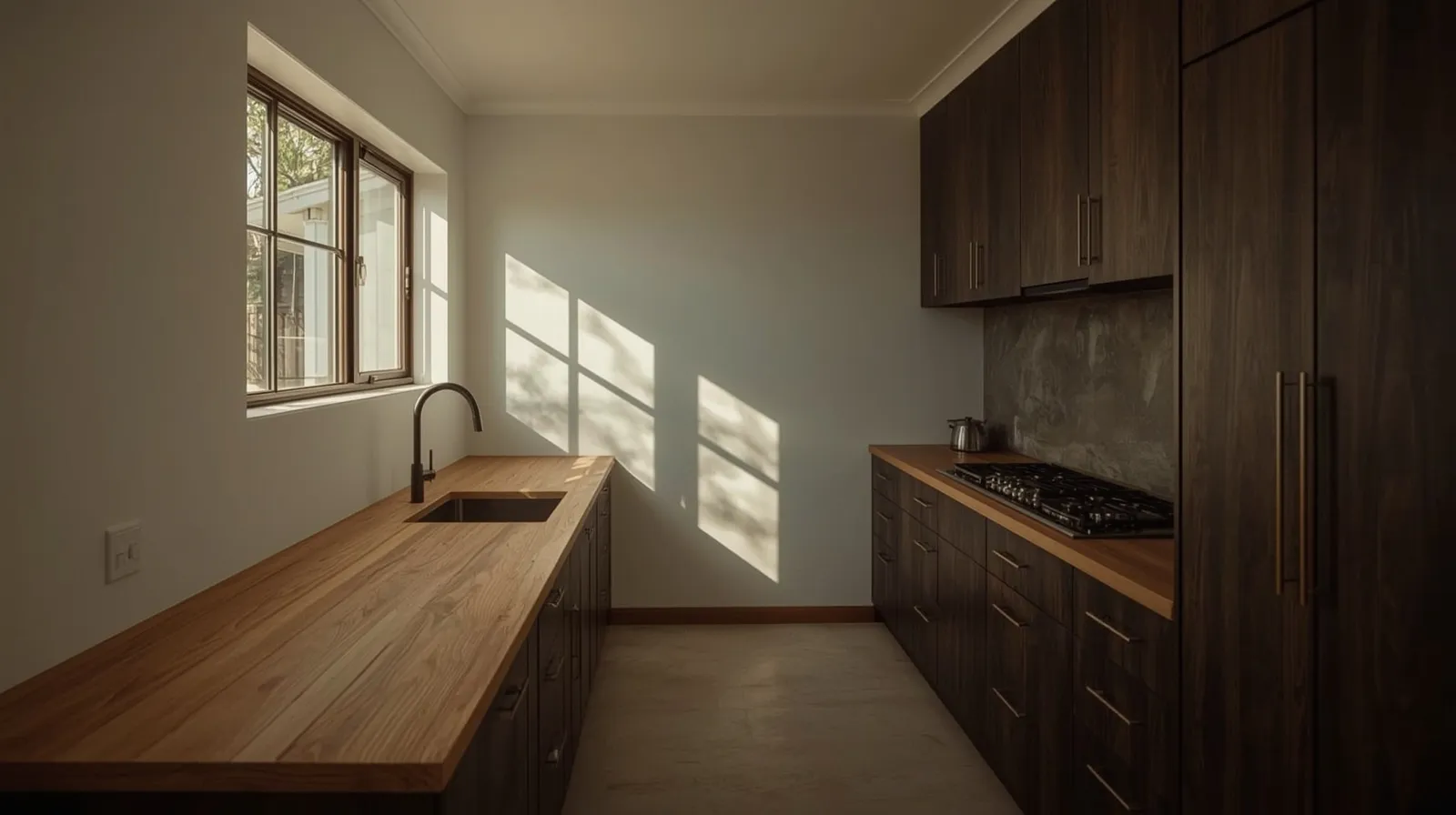
The problem wasn't money. It was decision paralysis. Every kitchen showroom they visited felt like the wrong answer — either too modern, too white, too much like every other renovated kitchen in Hobart. They didn't know what they wanted. They just knew what they didn't want.
A friend mentioned Tom's name at a dinner party. Someone who'd had a laundry done — a small job, a simple brief. She described it the same way: it just looks right. Like it was always there.
Daniel called Tom on a Tuesday morning. Tom asked one question before he'd agree to come out: what year was the house built?
"I thought that was a strange thing to ask," Daniel says. "I didn't understand why it mattered. Now I do."
Tom came on a Saturday. He walked through the kitchen without saying much — opened a cupboard, closed it, looked at the ceiling height, crouched down and looked at the floor. Then he walked through the rest of the house. The living room. The hallway. He stood in the doorway of the master bedroom for a moment and looked back down the hall toward the kitchen.
"He was looking at the whole house," Sarah says. "Not just the kitchen. We didn't understand what he was doing."
What he was doing was reading the house's character. The proportions, the colour temperature, the way the light moved through it. The kitchen had to fit all of that — not just the room it lived in, but the house it was part of.
When he came back to the kitchen he said one thing: I don't think the oak will work here.
They'd been planning on Tasmanian oak. Had decided on it before Tom arrived — the warm grain, the familiar look, the price point. They'd done enough research to feel confident about the choice.
Tom explained it quietly, without making them feel foolish. The house ran warm — the timber floors, the aged ceiling boards, the particular golden quality of afternoon light through north-facing windows. Tasmanian oak in this kitchen would fight with all of that. Blackwood would work with it. Darker, more complex figure, a colour that would sit in the room rather than compete with it.
Sarah and Daniel looked at each other.
"We'd spent six years deciding we wanted oak," Sarah says. "And this man we'd met forty minutes ago was telling us we were wrong. The strange thing was — we both knew immediately that he was right."
The blackwood came from a mill in the Huon Valley that Tom has used for fifteen years. He called Sarah before he ordered it.
"He wanted us to come and look at the timber before he committed," she says. "I hadn't expected that. I thought you just chose a species and that was it."
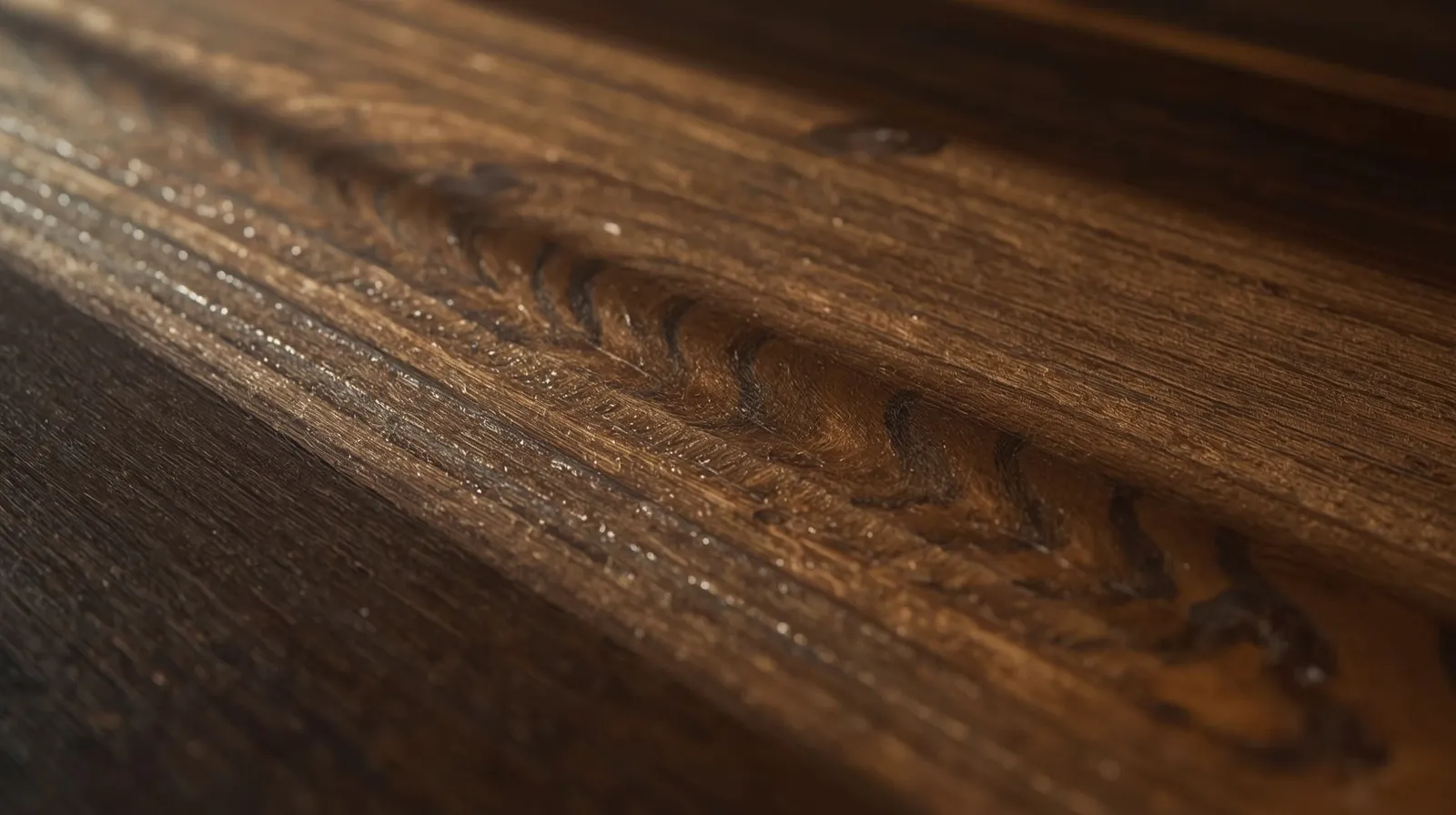
At the mill, Tom walked her through four different lots of blackwood. The figure in each board was different — some consistent and calm, some with complex swirling grain that would draw the eye. He explained what each would look like in ten years, how the light would catch it, which would suit the bench and which would suit the cabinet doors.
They chose together. Sarah picked the panel for the benchtop herself — a piece with a subtle wave in the grain that Tom said would open up as the timber settled.
It took three weeks to source enough matching stock. Tom called twice during that period to update her. Not to ask for anything. Just to say where things were.
The installation took two days in March. Tom arrived at seven in the morning and worked alone.
A house that old doesn't have straight walls or level floors — the years settle into it, walls move incrementally, corners that look square aren't. Every run of cabinetry had to be scribed individually to the surface behind it. A millimetre gap between a cabinet door and a wall that isn't plumb would have read as a mistake. There are no gaps.
On the afternoon of the second day, Sarah came home from work to find Tom on his hands and knees adjusting the tension on the last set of drawer runners. The benchtop was in. The cabinet doors were hung. The room looked — she searched for the word later and kept coming back to the same one — settled. Like it had exhaled.
Tom stood up, looked at the room for a long moment, and said: I think that's it.
He was gone by four o'clock. He left no mess. He sent an invoice three days later.
That was two years ago.
The blackwood has darkened slightly, the way the timber does as it ages. The grain on the benchtop has come forward — the wave Sarah chose at the mill is visible now in the right light, a slow movement through the surface that wasn't obvious when the timber was new.
Daniel puts it simply: "It looks like it was always there."
Sarah says something different. She says that in six years of living in the house, she'd never once loved the kitchen. Now she does. It sounds like a small thing when she says it out loud. She knows it isn't small.