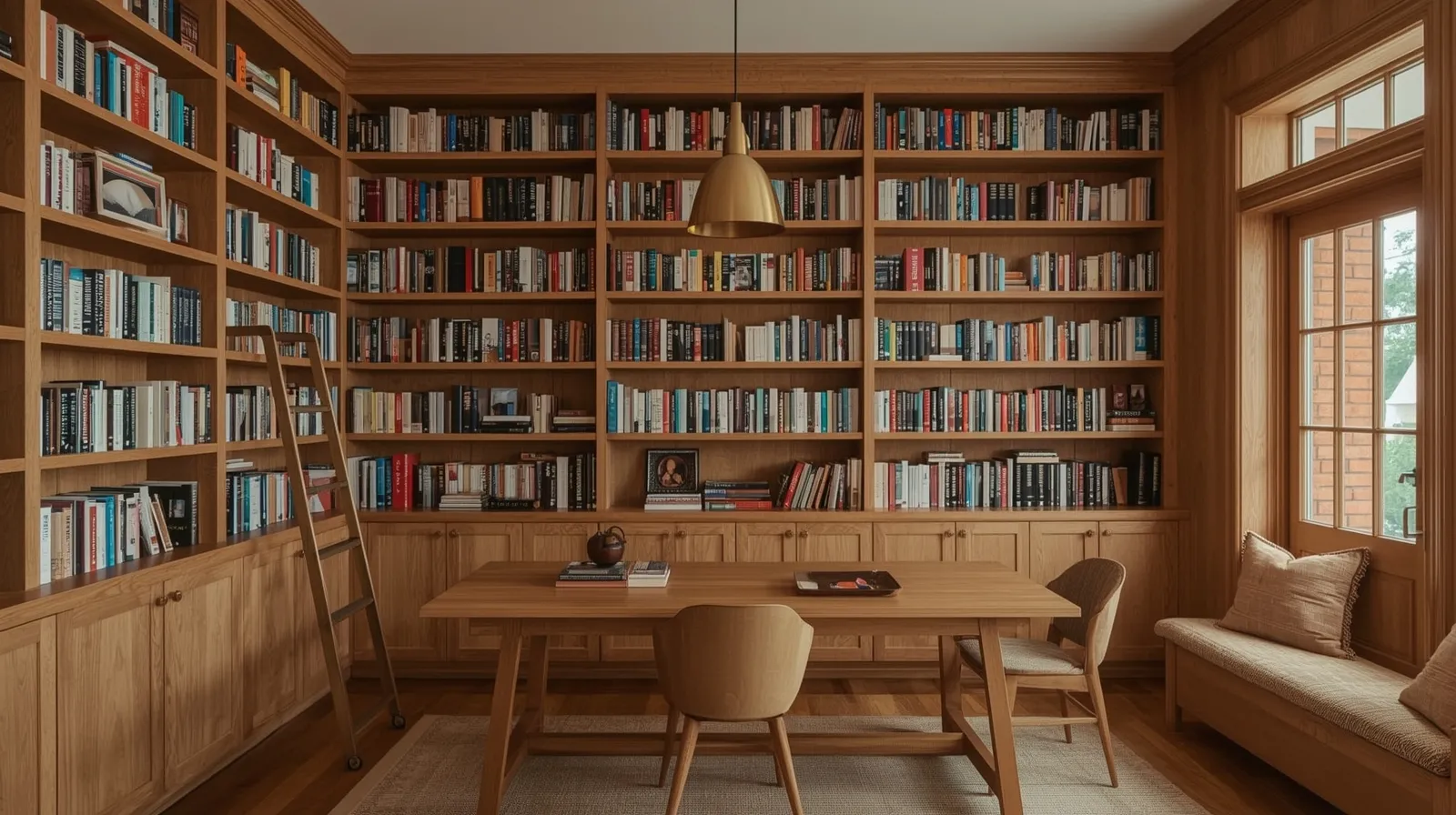
Floor-to-ceiling Tasmanian oak library wall, North Hobart

TASMANIAN OAK · NORTH HOBART · 2023

THE LIBRARY WALL

A room that finally knew what it was for.

James had worked from home since 2020. By 2023 he'd stopped pretending that was going to change.

The room he used was the back bedroom — small, north-facing, a window that looked onto the neighbour's fence. He'd furnished it practically: a desk from a Swedish flatpack retailer, a chair that was adequate, three cardboard boxes of books that had never found a shelf. The boxes had been there since he moved in. After a while he stopped seeing them.

The problem wasn't the room. The problem was that the room never stopped being the room. At seven in the evening, after the laptop had been closed and dinner had been eaten, he'd walk past the door and feel the pull of it — the unfinished email, the thing he'd meant to check, the general low hum of work that had no off switch. The room didn't know how to be anything other than what it was.

"I didn't go in there on weekends," he says. "Which sounds like a solution. It wasn't."

He'd been thinking about built-ins for a year before he called anyone. He had a clear picture of what he wanted: floor-to-ceiling shelving across the full back wall, a desk that could be concealed when not in use, and a rolling ladder. The ladder he'd seen in a photograph somewhere and hadn't been able to let go of — something about it felt like a commitment. A room that warranted a ladder was a room that took books seriously.

He called two joiners before Tom. The first quoted from photographs without seeing the space. The second arrived, measured the wall, and sent a figure three days later with no other communication. James didn't respond to either.

A colleague mentioned Tom's name. Said he was harder to get hold of and worth the wait.

Tom came on a Thursday evening after work. He asked to see the whole flat before he looked at the room. James showed him through — the living room, the kitchen, the hallway lined with framed prints. Then the back bedroom.

Tom stood in the doorway for a moment. Looked at the window. Looked at the wall. Looked at the boxes of books on the floor.

"How long have they been there?" he asked.

"Four years," James said.

Tom nodded like that told him something.

They talked for an hour. Not about specifications — about how James used the room, what time he started work, what time he wanted to stop, whether he worked better with books around him or found them distracting. Tom asked whether the laptop stayed in the room or travelled through the house. He asked about the afternoon light and whether James found it useful or annoying.

James had come prepared to talk about timber species and shelf depths. He hadn't expected to talk about his working habits.

"It felt like a therapy appointment," he says. "I mean that as a compliment."
By the end of the conversation Tom had one strong recommendation: the desk shouldn't just fold away. It should disappear completely — flush with the surrounding cabinetry when closed, invisible. Not a gesture toward concealment. Actual concealment. The room needed to be able to become a library. The desk was work. The library was not work. The distinction had to be physical and total.

James sat with that for a moment.

"That's what I'd been trying to solve," he says. "I just hadn't known how to say it."

The timber was Tasmanian oak — chosen for stability in a room that caught strong morning sun through an east-facing window. Timber that moved with temperature changes was the wrong material for floor-to-ceiling built-ins with tight tolerances. Tom explained this without being asked. James trusted the reasoning.

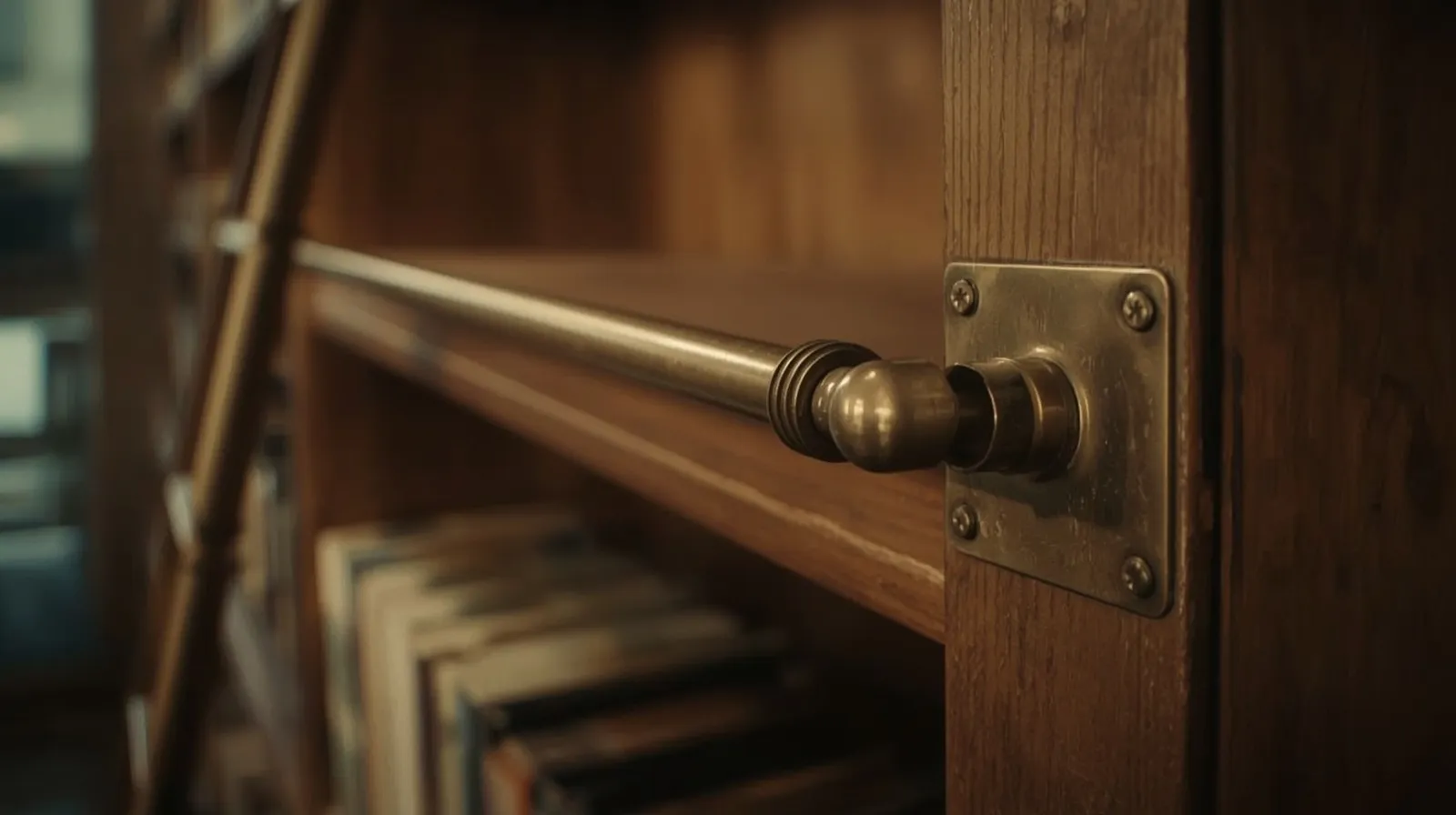
The ladder rail was salvaged — a brass track from a commercial fit-out being stripped in Hobart. Tom had been holding it for a job that suited it. This was the job.

"He called me about the rail separately," James says. "Said he'd found something that would work well and wanted to know if I was interested before he used it elsewhere. I didn't fully understand what it was until I saw it."

When he saw it, he understood immediately. The brass was aged, slightly green at the fittings, with the particular quality of something that had already had a life. Against the clean new oak, it looked like it had been there longer than anything else in the room.

The installation took a full day. Tom arrived at seven. The floor in the room had settled unevenly over the decades — each carcass section had to be levelled independently before it could be fixed. The tolerances on a floor-to-ceiling unit are unforgiving; a fraction of a degree out of plumb at the base becomes visible at the top of a three-metre run.

James went to work and came home at six.

The room was finished. Tom was gone. The boxes of books were still on the floor where they'd been for four years, because Tom had moved them to work and then moved them back.

James stood in the doorway for a long time.

"I didn't go in," he says. "Not that night. I wanted to look at it first."

The next morning he came in before work and shelved every book. It took two hours. The ladder moved on the rail with less resistance than he'd expected — smooth, quiet, the kind of mechanism that had been made carefully. He climbed it twice before he started the working day, for no reason except that it was there.

Six months later, unprompted, James mentioned something to Tom in an email about a small repair.

He'd been finishing work at five-thirty every day. Not because of any deliberate decision. Because the desk folded away, the library appeared, and the room became somewhere else. The boundary he'd been trying to construct for three years had arrived in the form of a cabinet door.

Tom hadn't designed that outcome. He'd just listened carefully enough to understand what the room actually needed to do.

The books that lived in cardboard boxes for four years now have a shelf. The ladder makes a soft sound on the rail when it moves. On weekday evenings and on weekends, James goes into the room.