Claire and Marcus had rented for eleven years.
Not reluctantly — they'd moved twice for work, lived in three different cities, and treated the impermanence as practical rather than unsatisfying. But somewhere in their mid-thirties, with a block of land in the Huon Valley and a builder contracted, they found themselves thinking differently about objects. About what it meant to finally own something.
"Everything in the build felt temporary to us," Claire says. "The kitchen from the supplier catalogue. The bathrooms from a range. Flooring from a showroom. All of it fine. All of it replaceable. At some point I said to Marcus — I want one thing in this house that isn't from a catalogue. One thing that will still be there when we're gone."
They didn't know what that thing was yet. The house was framed. The roof was on. The walls were still open.
A neighbour mentioned Tom's name — a woman who'd had a workbench built for her pottery shed, nothing elaborate, but she'd used the phrase he listens differently to other tradespeople. It stayed with Claire.
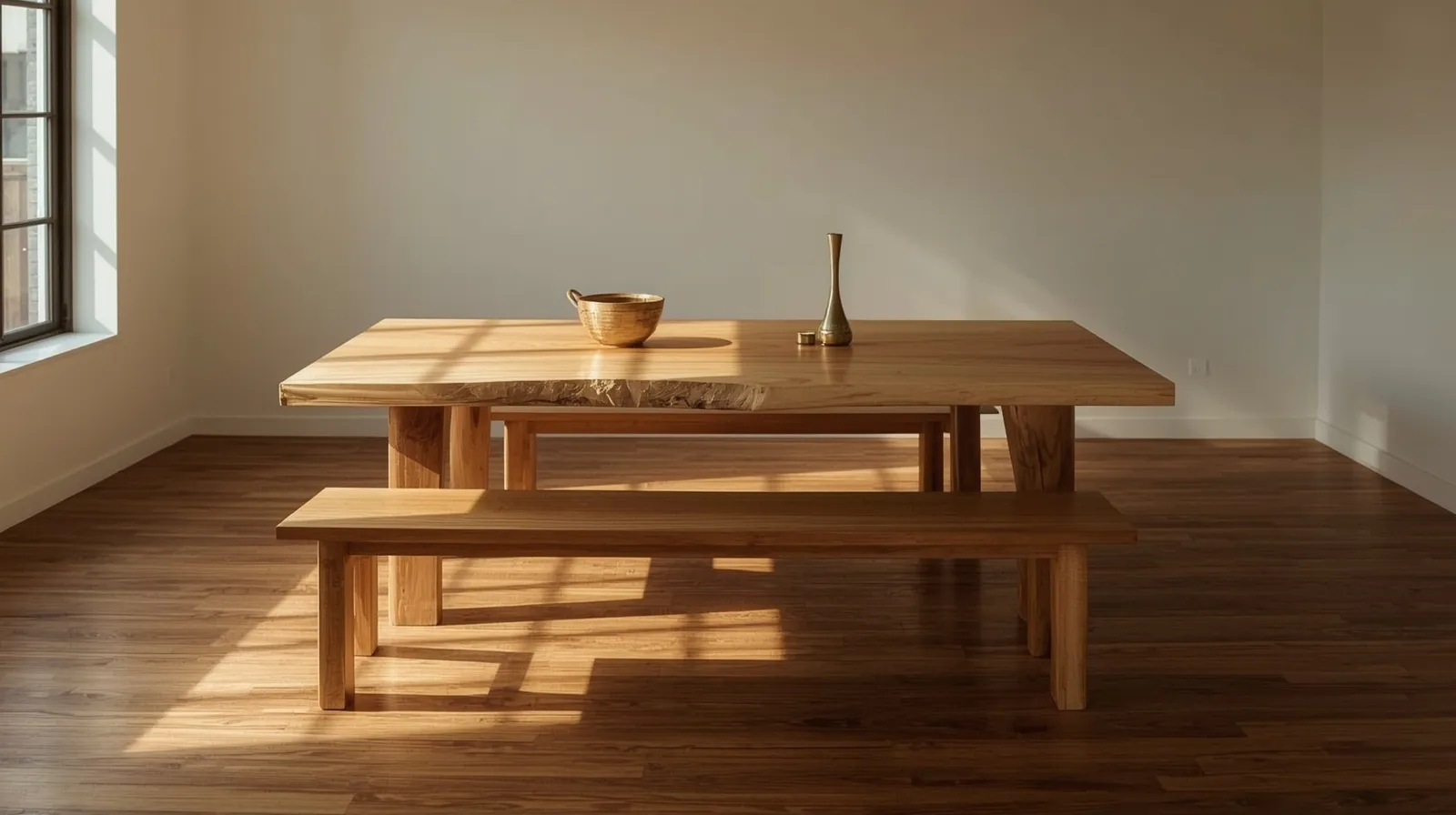
She called him on a Tuesday. Explained the brief as she understood it — a dining table, a bench seat on one side, something made from Tasmanian timber. Something that would last.
Tom asked her one question: how long did she want it to last?
She said she didn't know. Longer than the house. Maybe longer than them.
There was a pause on the phone.
"He said 'I know what you need,'" Claire recalls. "I didn't know what he meant. But something in the way he said it made me not ask."
What Tom had in mind was Huon pine. Salvaged — not milled new, because commercial Huon pine harvesting has been prohibited since 1993 and new timber is nearly impossible to source legally. Salvaged Huon pine comes from old buildings being demolished, from riverbeds where logs have been submerged for a century, from private holdings. It surfaces irregularly. You find it when it comes up, or you don't find it.
Tom told Claire he'd need time to source the right piece. He didn't know how long. He'd be in touch when something came through.
"I didn't fully understand the timber at that point," she says. "He explained it — the growth rate, the age of it, what it meant that it couldn't be farmed. But I don't think I understood it in a felt sense. Not yet."
Three weeks passed. Then six. The house was getting its wall linings. Claire had chosen a floor, a kitchen, curtains she wasn't sure about. The table was still a phone call that hadn't come yet.
She didn't push. Something about the initial conversation had calibrated her patience. This was not the kind of thing you rushed.
Tom called on a Thursday morning in May.
He'd found a piece — a slab salvaged from a demolished boatshed in Geeveston, part of a lot a builder had been holding for years. Enough for a table and a bench seat with some left over. The timber was old-growth, slow grown, the grain tight and even in a way that plantation timber never achieves. It had been air-drying for decades. It was ready.
He asked if they wanted to come and see it before he committed.
They drove down on Saturday. Tom had the pieces laid out in the workshop — the slab for the tabletop, the sections for the bench. The timber was pale gold, almost luminous, with a straight grain that seemed to run forever. It smelled faintly of something Marcus couldn't name. Resinous. Old.
"I cried," Claire says. "I don't fully understand why, even now. It just looked like it had been waiting for something specific to happen to it."
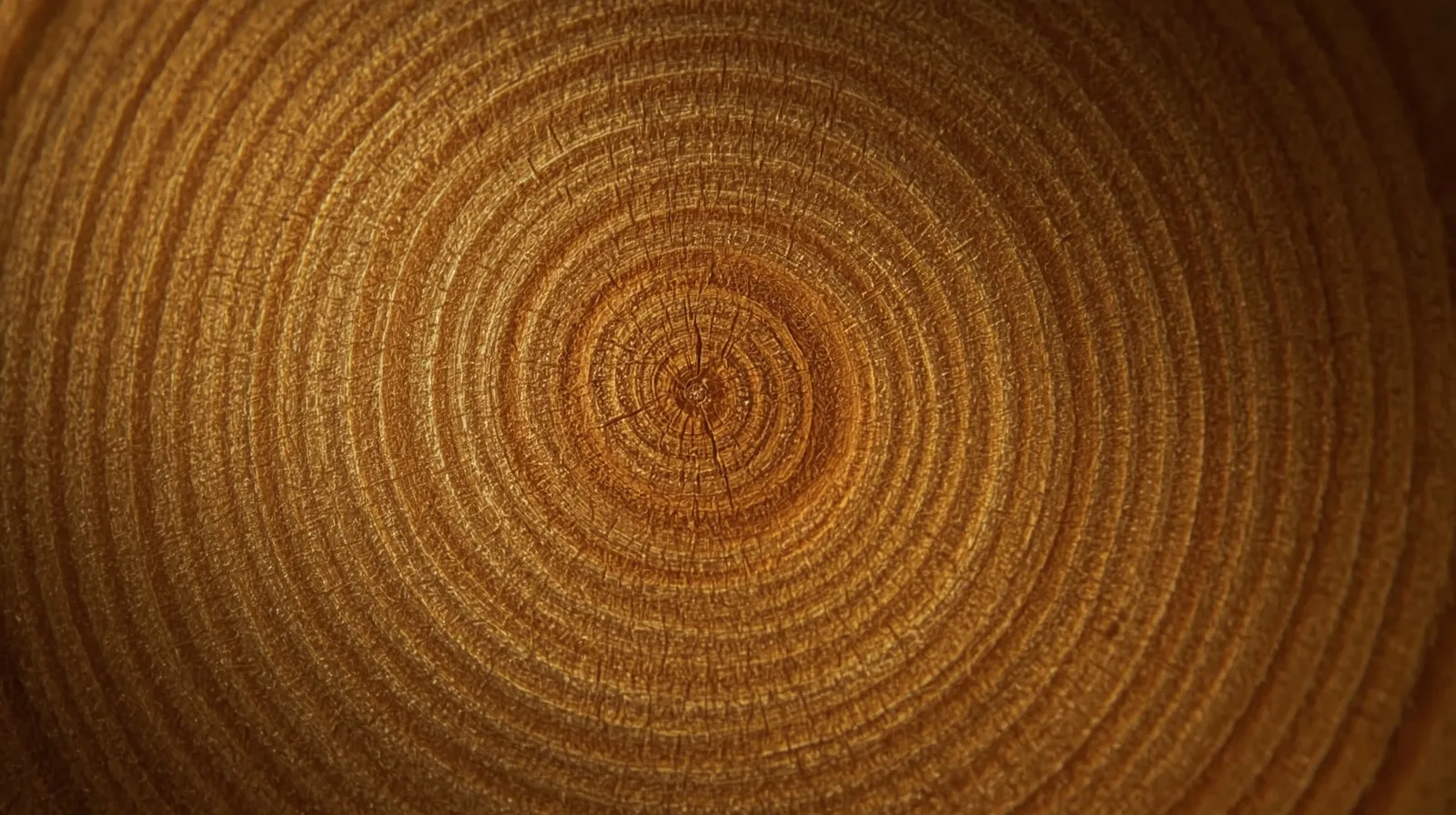
Tom picked up a piece and showed her the end grain. Counted the rings with his finger, lost count, estimated. This part of the tree had been growing, he said, sometime around the 1850s. Before Federation. Before the valley had a town.
Marcus put his hand on the slab and left it there for a moment.
"We said yes before we left the workshop," he says. "We hadn't even talked about price."